Dave Lee

Everything tagged #ai

An AI-generated Michael Caine will narrate a 13-hour audiobook version of The Odyssey, Variety reports. The project is the work of leading AI speech start-up ElevenLabs. I’m disappointed that Caine, who knows a thing or two about being a struggling working class actor trying to make it, would put his name to something that stands to limit opportunities for new talent further down the ladder.

Caine’s affiliation with ElevenLabs isn’t new, as the Oscar winner licensed his voice and likeness last year to the firm’s “Iconic Marketplace,” its collection of characters that companies can pay to use for commercial purposes. But this partnership expands the arrangement, one Blank said is rooted in “consent and compensation.” ElevenLabs pays creators every time their voices are used in ElevenReader, and in Caine’s case, he was specifically consulted about the project and approved the marketing materials, Blank said. (Whether he’s heard the final project, however, couldn’t be determined.)

Michael Caine’s AI-Generated Voice to Narrate ‘The Odyssey’ Audiobook Ahead of Christopher Nolan’s Movievariety.comThe AI audio firm is using Caine’s voice to anchor a roughly 13-hour version of “The Odyssey” weeks before Christopher Nolan’s film hits theaters.
On the day SpaceX overtook Amazon's market cap, this (funny) post on everyday tech gripes winds its way to a serious conclusion that helps frame this next phase of even bigger Big Tech:

Because the truth is, tech doesn’t have an image problem. It doesn’t have a message problem. It has an intention problem. What’s wrong with the axe murderer who broke into my house is not that he hasn’t successfully persuaded me to buy into his narrative. What’s wrong is that he’s trying to kill me with an axe. Similarly, when you launch a product that’s designed to put millions of people out of work, block access to sources of verifiable truth, replace human creativity with slop, and lower the barriers to every sort of atrocity, the problem isn’t that you haven’t told the public a good story about those things. The problem is that you are trying to do them.

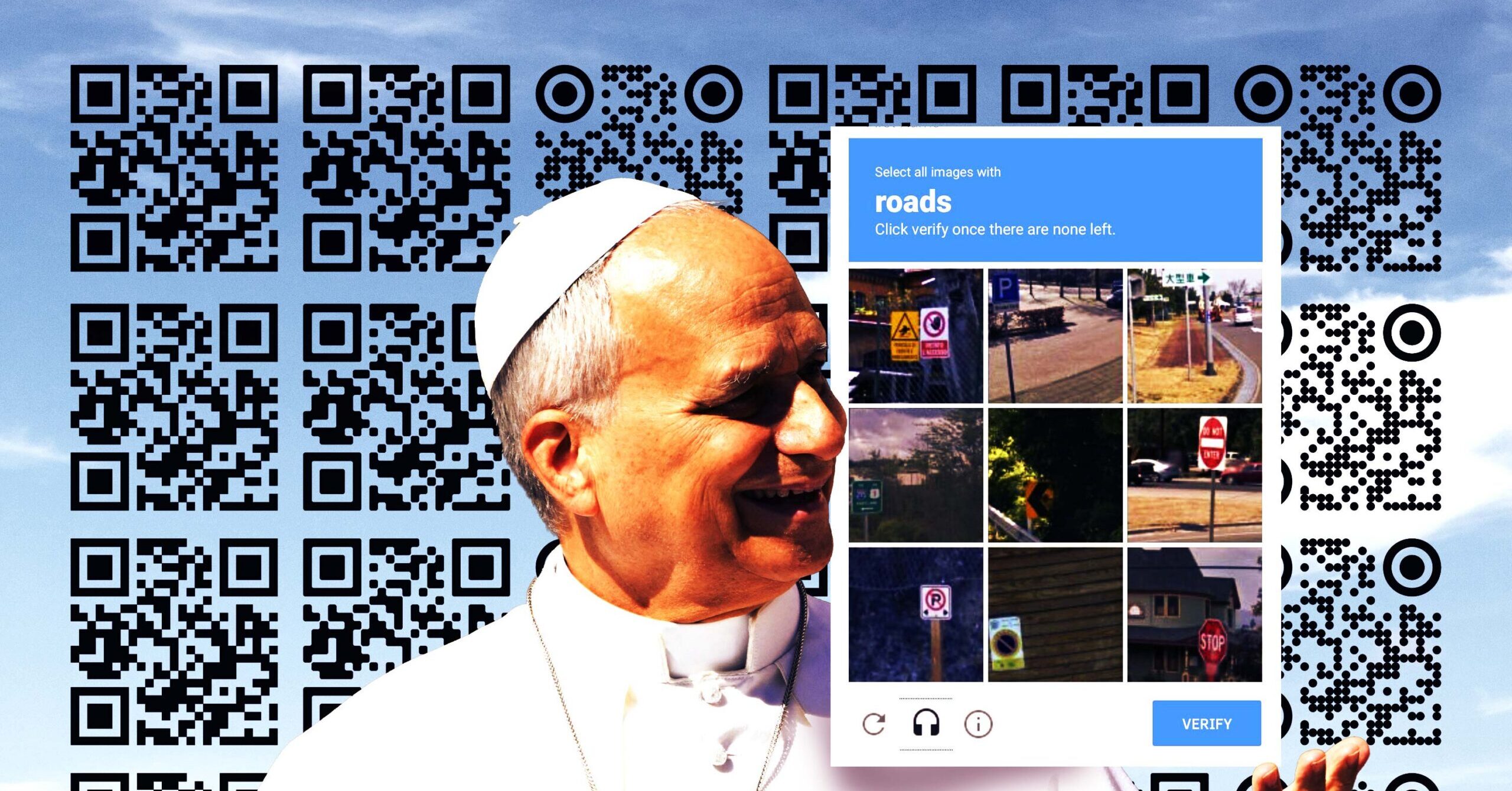
The 40 Most Rage-Inducing Problems in Techtheringer.comThe bugs, broken apps, and nightmare customer-service bots we can't escape, presented as a blessed and sacred addendum to Pope Leo XIV’s new encyclical on AI

I don't know about you, but if I was in a profession — consulting — that seemed particularly ripe to be disrupted by AI, I might be extra cautious when using the technology myself. KPMG didn't get the memo, allowing hallucinated case studies to make their way into a special report on the definitely real benefits of AI. As the Financial Times points out, reports from these consultancies will be seen as reliable, thus embedding hallucinations into future AI models.

The October report, “Redefining excellence in the age of agentic AI”, made numerous false claims about the use of AI by organisations including the Swiss bank UBS, the UK’s National Health Service and the public transit groups Swiss Federal Railways and Transport for London.

The inaccuracies were identified as AI hallucinations by the research group GPTZero and verified by the FT. After being alerted to the issue, UBS said it would ask KPMG to remove the false claims, and the Big Four firm on Thursday pulled the report from some of its websites.

KPMG report contained AI hallucinations on benefits of . . . AIft.com[FREE TO READ] Bogus case studies on UBS and transit systems exaggerated adoption of the technology

Ping pong bot

Reuters reports on Ace, a ping pong-playing robot created by AI researechers at Sony, was able to beat some of the world's best human players.

Will Dunham writes:

In matches detailed in the study, Ace in April 2025 won three out of five versus elite players and lost two matches against professional players, the top skill level in the sport. Sony AI said that since then Ace beat professional players in December 2025 and last month.

Of course, Sony's ambition here isn't to make a champion table tennis player, fun as that is. Broader applications can follow:

The project's goal was not only to ⁠compete at table tennis but to develop insights into how robots can perceive, plan and act with human-like speed and precision in dynamic environments, Dürr said.

"The success of Ace, with its perception system ​and learning-based control algorithm, suggests that similar techniques could be applied to other areas requiring fast, real-time control and human interaction - such as manufacturing and service robotics, as well as applications across sports, entertainment and ​safety-critical physical domains," said Dürr, lead author of a study describing Ace's achievements published on Wednesday in the journal Nature.

At some point I'm sure someone will come up with some kind of Humans v Robots Olympic Games. Though how long that will last is questionable. At a certain point the robots will just never lose.

ChatGPT's gender gap has closed

Interesting data from Nicholas Thompson of the Atlantic:

"Because we are asking it about our relationships" offers a woman in Thompson's comments, though we're just as likely to hear about men turning to AI for relationship advice as women. Another comment speculates that this shift was inevitable as AI matured into a mainstream tool, which is about where we are now.

Be nice to your chatbot

Casey Newton:

Being polite to a large language model can feel strange or even silly — roughly equivalent to thanking a toaster. And yet a recent paper from Anthropic lends scientific weight to the theory that chatbots work better when you’re nice to them.

The researchers found that language models have fairly reliable internal representations of feelings like “happiness” and “distress,” and that these representations affect their behavior — sometimes for the worse. For example, when Claude Sonnet 4.5 begins to represent “desperation,” the model is more likely to cheat at coding tasks.

Read more: The scientific case for being nice to your chatbot

The end of the anecdotal lede

Former ProPublica president Richard Tofel declares the days of the "anecdotal lede" to be numbered. Among the reasons why, he says, is how AI might change our habits:

AI is another important factor pushing in the same direction. How much AI is going to take over news delivery is, I think, more of an open question than some techno-enthusiasts believe. But there is no real question that the degree to which content will come to us filtered through AI will grow substantially. And AI is simply going to strip away the grace (and, I am afraid, the power) of anecdotal ledes from those who insist on continuing to employ them. If you are summarizing a story, Kilgore’s nut graf survives—it even floats to the top. But the slow slide into the pool of the anecdotal lede is deemed surplusage.

"And not before time!" says a room of grumpy editors. (I'm not in that room.)

Tofel talks about the bulleted AI-generated summaries many news orgs (including the one I work for) are placing on top of stories these days. Why have this and then drop into an anecdotal lede? It's a good point. But I'm not giving up the right to an anecdotal lede that easily. I have two simple rules. First, the anecdote needs to be extremely relevant to the story at hand. Second, the anecdote needs to actually be good.

One word a minute

This 2,800-word essay took me 45 hours to write. I wrote it from scratch five times, and only 10% of my words made the final cut. That comes out to an average pace of one word per minute; imagine typing a single word, taking a brief walk, and then coming back to type the next. Writing happens at an unbearably slow pace for a culture that’s glued to vertical feeds with split-second reward loops, but thinking takes time. Good thinking takes a lot of time and even more toil. Essay writing is a process I’ve grown to love, a process I believe is deeply human, and yet it’s a process that’s becoming endangered.

-- Michael Dean: Essay Writing as Personal Sovereignty

A clear violation

A note attached to a New York Times book review:

Editors’ Note: March 30, 2026:

A reader recently alerted The Times that this review included language and details similar to those in a review of the same book published in The Guardian. We spoke to the author of this piece, a freelancer reviewer, who told us he used an A.I. tool that incorporated material from the Guardian review into his draft, which he failed to identify and remove. His reliance on A.I. and his use of unattributed work by another writer are a clear violation of The Times’s standards. The reviewer said he had not used A.I. in his previous reviews for The Times, and we have found no issues in those pieces. The Guardian review of “Watching Over Her” can be read here.